Coastal Plants
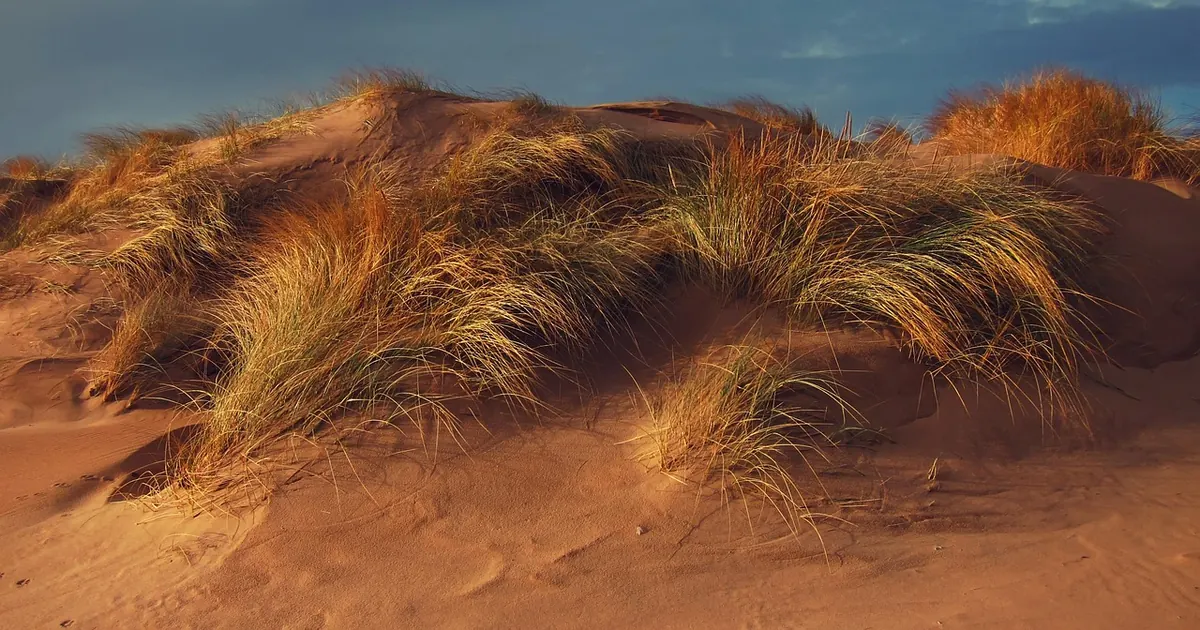
Marram Grass vs. Sea Couch: Which Plant Stabilises Dunes Best?
Visit almost any dune system around the British coast and you will meet two grasses doing very different jobs. Marram grass catches wind-blown sand and builds the dune upwards. Sea couch grips the seaward edge, shrugging off salt spray and the occasional soaking from a spring tide. Pick the wrong one for the wrong spot and a planting scheme can fail quietly, with bare sand scoured and trampled long before the roots knit together.
Both are native perennials with creeping underground stems, and both appear in coastal restoration plans. They are not interchangeable. What follows is a practical comparison of how each grows, what each is good at, and what each needs from you.
Two grasses, two strategies
The difference between them comes down to sand movement. Marram (Ammophila arenaria) is built for burial. Its wiry rhizomes run through loose sand, and fresh sand falling on the plant actually stimulates it to grow taller and send out new shoots. Left on a dune that has stopped moving, marram thins out and loses vigour. It is a plant of the mobile foredune, not of the settled grassland behind it.
Sea couch (Elytrigia atherica, also written Elymus atherica) plays a different game. It does not need to be buried to thrive. It tolerates salt spray, wind battering and brief inundation at the dune toe, and it spreads steadily by tough rhizomes into a dense, matted stand. Where marram is a pioneer that wants disturbance, sea couch is a competitor that wants a foothold it can keep.
Marram grass: the dune builder
How it traps sand
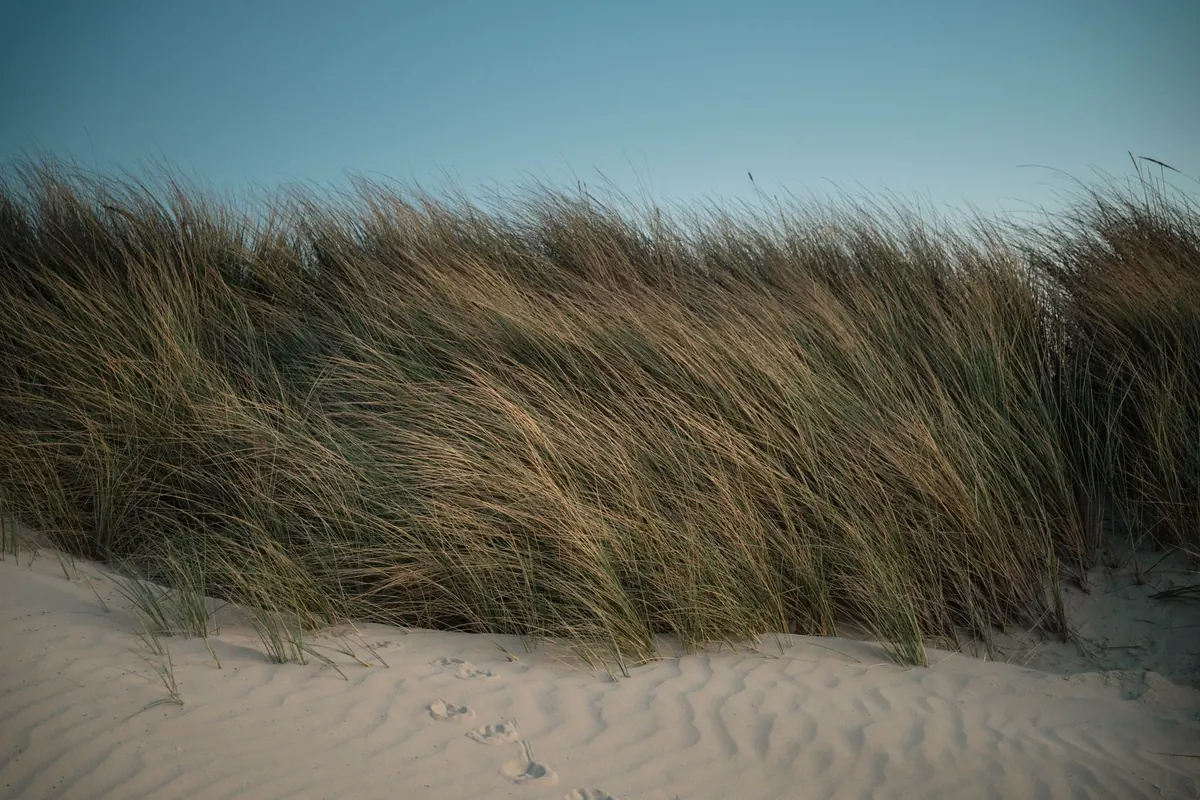
Marram grows in stiff tufts of tightly rolled, grey-green leaves. Wind slows as it passes over those tufts and drops its load of sand, which collects around the base of the plant. The buried stems push up again, the tussock grows, and the dune rises. That is the whole mechanism of a foredune in one sentence, and it is why marram is the species most often planted on the seaward face.
What marram will not do
It will not thrive where sand is stable, and it will not hold a dune face that is being actively undercut by waves. Nor does it appreciate heavy trampling, rabbit grazing or competition from coarse grasses. Plant marram into fixed dune grassland full of fescue, and it will sulk and disappear.
Sea couch: the front-line grip
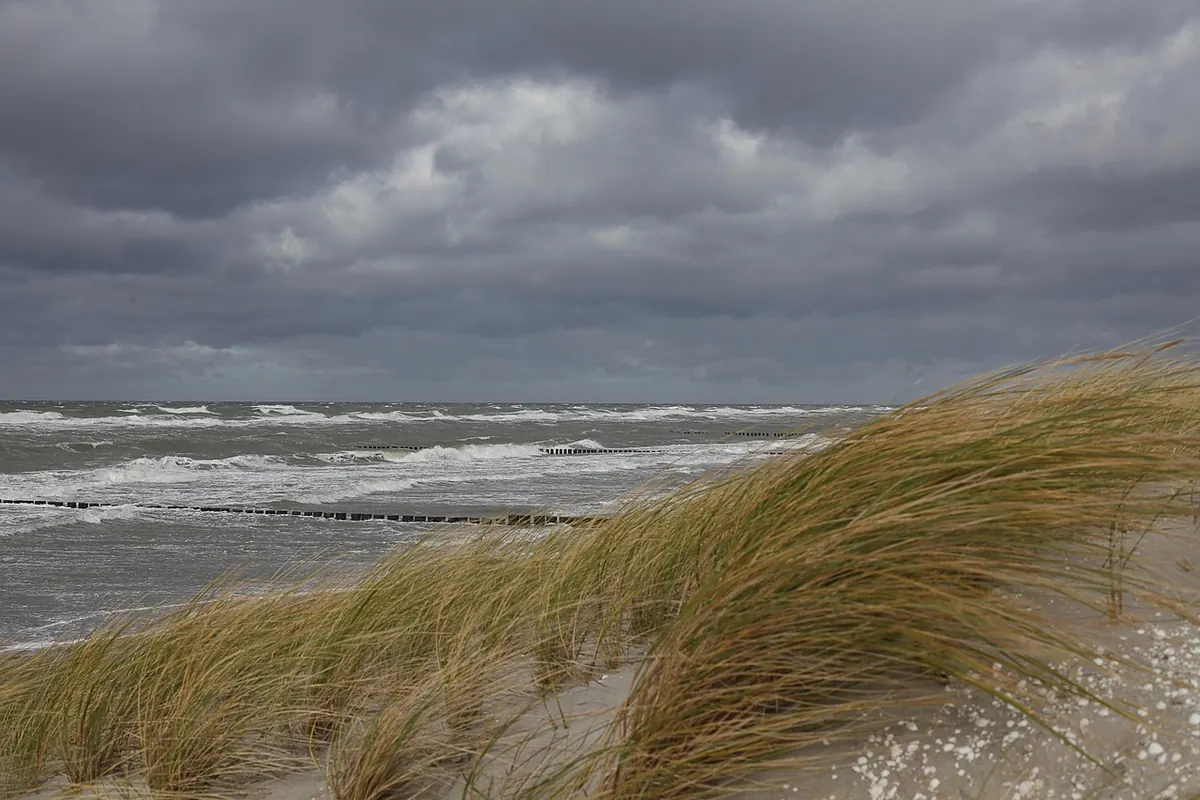
Sea couch is the taller, bluer, stiffer plant. Its leaves are sharply pointed — gloves are sensible when handling it — and it forms a coarse, tussocky cover at the top of the beach and along the dune edge. It is often found just seaward of marram, in the narrow band where the tide occasionally reaches and salt spray is constant.
Its root system is the point. The rhizome mat binds sand and shingle firmly, and the plant regrows after damage from storms. For holding the toe of a dune that gets clipped by winter waves, sea couch is usually the more dependable of the two. The trade-off is vigour: where grazing has stopped, sea couch can spread into fixed dune grassland and shade out the low-growing flowers that make those areas special.
Which plant stabilises better?
The honest answer is that they stabilise different things, and a healthy dune needs both.
- Building dune height: marram, comfortably. It is the sand-trap. Sea couch does not accumulate sand in the same way.
- Holding the dune toe: sea couch. It survives salt, spray and occasional overwash better than marram.
- Quick cover on a bare, dry, mobile surface: marram, provided you plant at the right time and protect it.
- Holding ground once sand movement slows: sea couch, which does not need burial to keep going.
- Wildlife value: both support cover for invertebrates and nesting birds, but neither should be allowed to take over species-rich fixed dune.
Rule of thumb: match the plant to how much sand moves on the site, not to how much dune you would like to see.
Planting needs side by side
Marram is normally planted as tufts or plugs lifted from stock beds, never dug from the wild. Plant it in the dormant season, roughly between late autumn and early spring, when the sand is cool and damp and there is no risk of a hard frost. Space the tufts so that the sand between them will fill in within a season or two, and firm each one in without burying the growing point too deeply.
Sea couch is planted in much the same way, but position matters more than technique:
- Put sea couch low on the profile — top of the beach, dune toe, seaward edge — where it will get salt and the odd wetting.
- Plant into bare sand or shingle, not into established dune grassland, or you will simply add another coarse grass to the sward.
- Allow more room than you would for marram. Sea couch spreads aggressively and will close the gaps itself.
- Expect slower establishment on exposed, wind-scoured sites; water in during a dry spell in the first season if you can.
For both species, one practical point matters more than any other: protect the planting for the first winter. A few metres of chestnut paling, some brash laid over the sand, or a temporary fence to keep people and dogs off the new tufts will do more for establishment than any fertiliser or extra plant.
Check permissions before you start. Digging up wild plants without the landowner's consent is generally an offence in the UK, and many dune systems are protected sites where any work needs agreement from the relevant conservation body. Buying native coastal stock from a specialist nursery avoids the problem entirely.
Getting it right on your patch
Walk the site first and read the sand. If the surface is loose, drifting and building, marram is your plant; plant it in tufts across the accreting area and let it work. If the problem is a scoured toe, a cut face or a spot that takes spray and the occasional tide, sea couch will earn its place. Where the two meet, plant a band of each and let the transition sort itself out.
Then keep your expectations realistic. Planting helps a dune that already wants to build. It will not save a dune whose front face is being removed by waves, and no grass will hold ground that is being trampled flat by hundreds of pairs of boots each weekend. Plant the right species in the right zone, fence it, leave it alone for a season, and the sand will do most of the rest.
Photo: Collie581 / Pixabay
Related Articles